
Be the first to review “Neon Day Gecko Pair (Phelsuma klemmeri) For Sale” Cancel reply

Phelsuma klemmeri
Day Geckos, GeckosNeon Day Gecko Pair (Phelsuma klemmeri) For Sale
$500.00
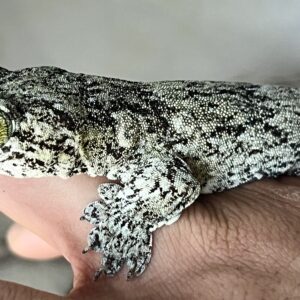
Pair. Neon turquoise with yellow head — one of the smallest day geckos. IUCN Endangered — captive-bred.
Availability: 1 in stock
Related products
- Geckos
Sarasinorum Gecko (Correlophus sarasinorum) For Sale
Price range: $600.00 through $1,650.00 This product has multiple variants. The options may be chosen on the product page - Geckos
Halmahera Giant Gecko (Gehyra marginata) For Sale
Price range: $150.00 through $415.00 This product has multiple variants. The options may be chosen on the product page - Geckos
Emerald False Gecko (Pseudogekko smaragdinus) For Sale
Price range: $550.00 through $1,515.00 This product has multiple variants. The options may be chosen on the product page

Watch

Repti Zoo 18x18x24 Terrarium For Neon Blue Day Gecko And Isopod Habitat — watch on YouTube
Documented lineage
This animal is recorded in our open registry as accession 340.
Provenance record
- Species
- Phelsuma klemmeri
- Origin
- Captive bred
This animal has a permanent record in SpeciesVault, our open registry of origin and lineage.
Care questions
- Can day geckos be handled?
- They should not be. Phelsuma have extremely delicate skin that tears when gripped, and they are fast enough that a handling attempt usually ends in an escape. They are among the best display animals in the hobby and among the worst handling animals.
- Do day geckos need UVB?
- Yes. These are diurnal baskers and UVB is a requirement rather than an enhancement. Pair it with a basking spot and dense planting so the animal can move in and out of exposure.
- What do day geckos eat?
- Small live insects dusted with calcium and D3, plus a fruit or nectar mix two or three times a week. The nectar component is not optional — it is a substantial part of the natural diet.
- What humidity do these geckos need?
- Most tropical species need a humidity cycle rather than constant saturation — misting to raise humidity, then allowing partial drying, with good ventilation throughout. Persistent stagnant damp causes far more health problems than brief dry periods.
- Do these geckos need UVB?
- Low-level UVB benefits most diurnal species and is increasingly recommended even for crepuscular ones. It is not a substitute for correctly supplemented food, and the fixture must be replaced on the manufacturer schedule regardless of whether it still emits visible light.
- What size enclosure does this gecko need?
- Arboreal geckos use height rather than floor space, so a tall enclosure matters more than a wide one. An 18x18x24 inch vivarium suits most medium arboreal species; large species need more. Cork bark, branches and live or artificial planting give the climbing routes and cover the animal will actually use. We stock bark and substrate in terrarium supplies.
- What do these geckos eat?
- Appropriately sized live insects dusted with a calcium and D3 supplement. Several arboreal species also take a prepared fruit-based diet, which simplifies feeding considerably. Feeding frequency depends on age and species — see how often to feed a gargoyle gecko for the pattern most arboreal geckos follow.
- Do geckos need UVB lighting?
- Diurnal species such as day geckos need it. For nocturnal species it is not strictly required when the diet is properly supplemented, but low-output UVB has become standard practice and there is no evidence it does harm. Whatever you use, provide a shaded retreat so the animal can choose its exposure.
- Can this gecko be handled?
- Most of the species we keep are display animals rather than handling animals. Arboreal geckos are fast, and several will drop the tail when restrained — in many species it does not grow back the same. Handle briefly, support the body, and never hold a gecko by the tail.
- Can two geckos be housed together?
- Not by default. Males of most species are territorial and will fight, sometimes fatally. House singly unless you have a proven, size-matched pair and an enclosure large enough to give both animals separate territory. Pairs we offer are listed as pairs for that reason.

Reviews
There are no reviews yet.