
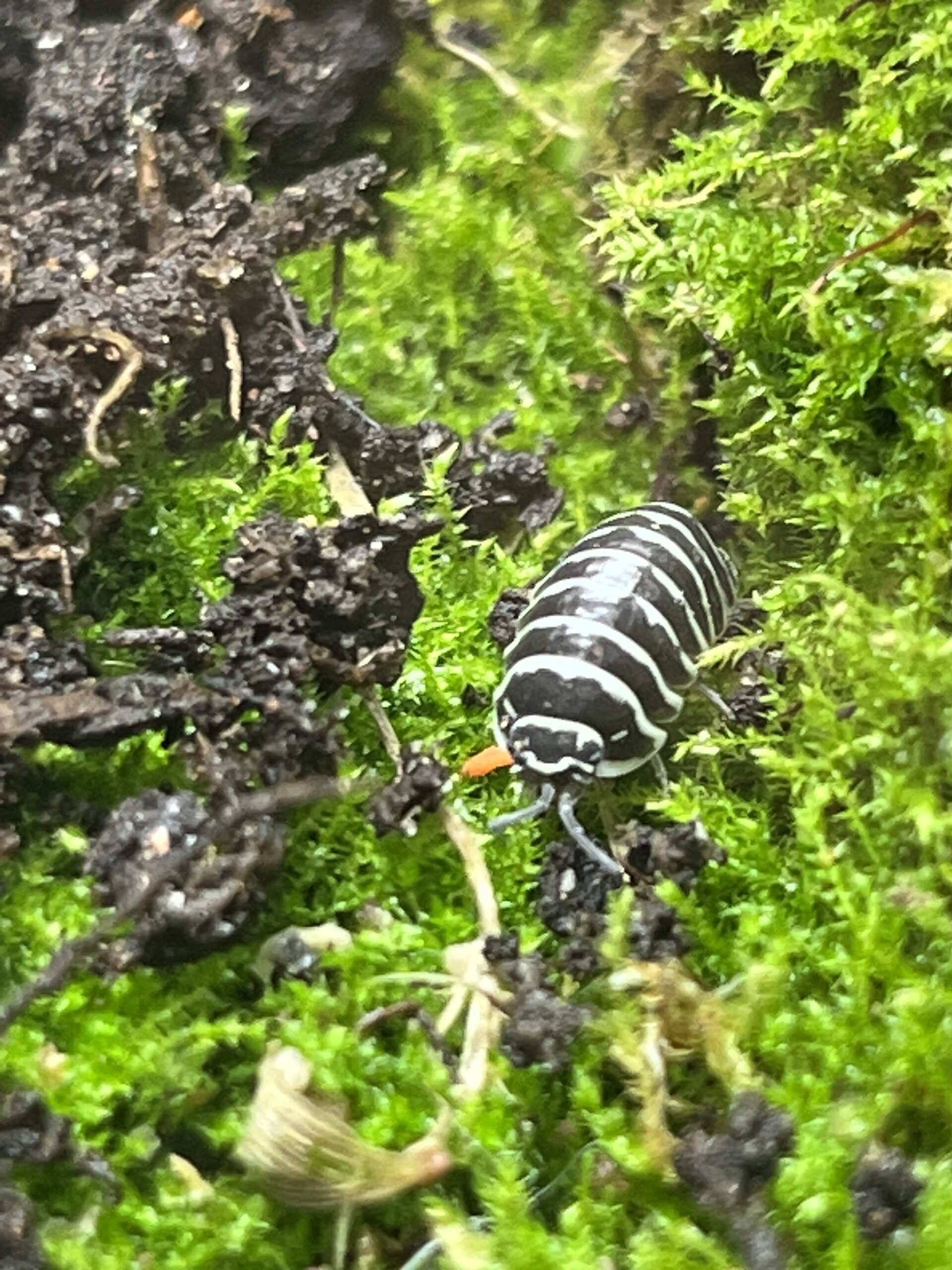
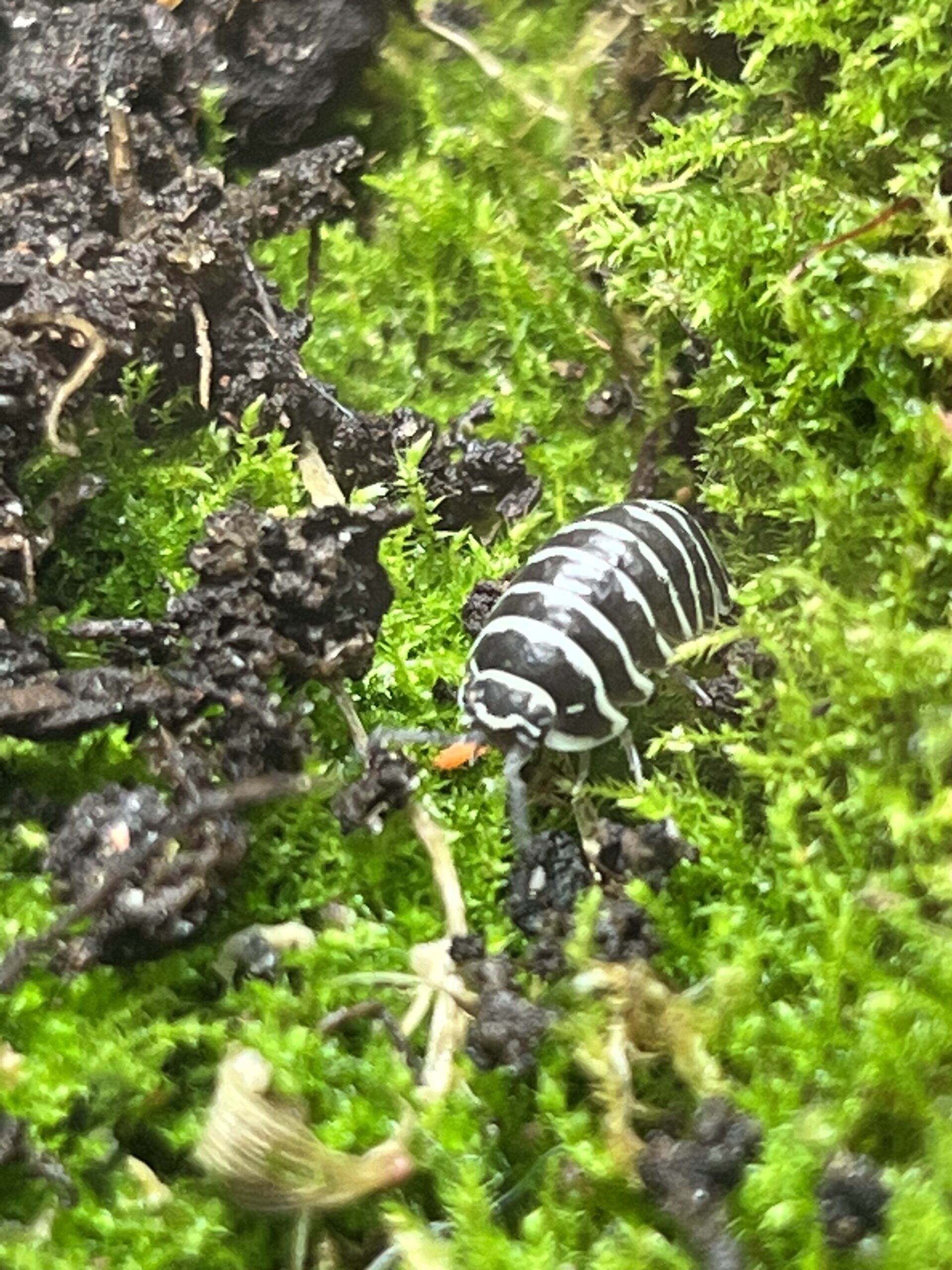
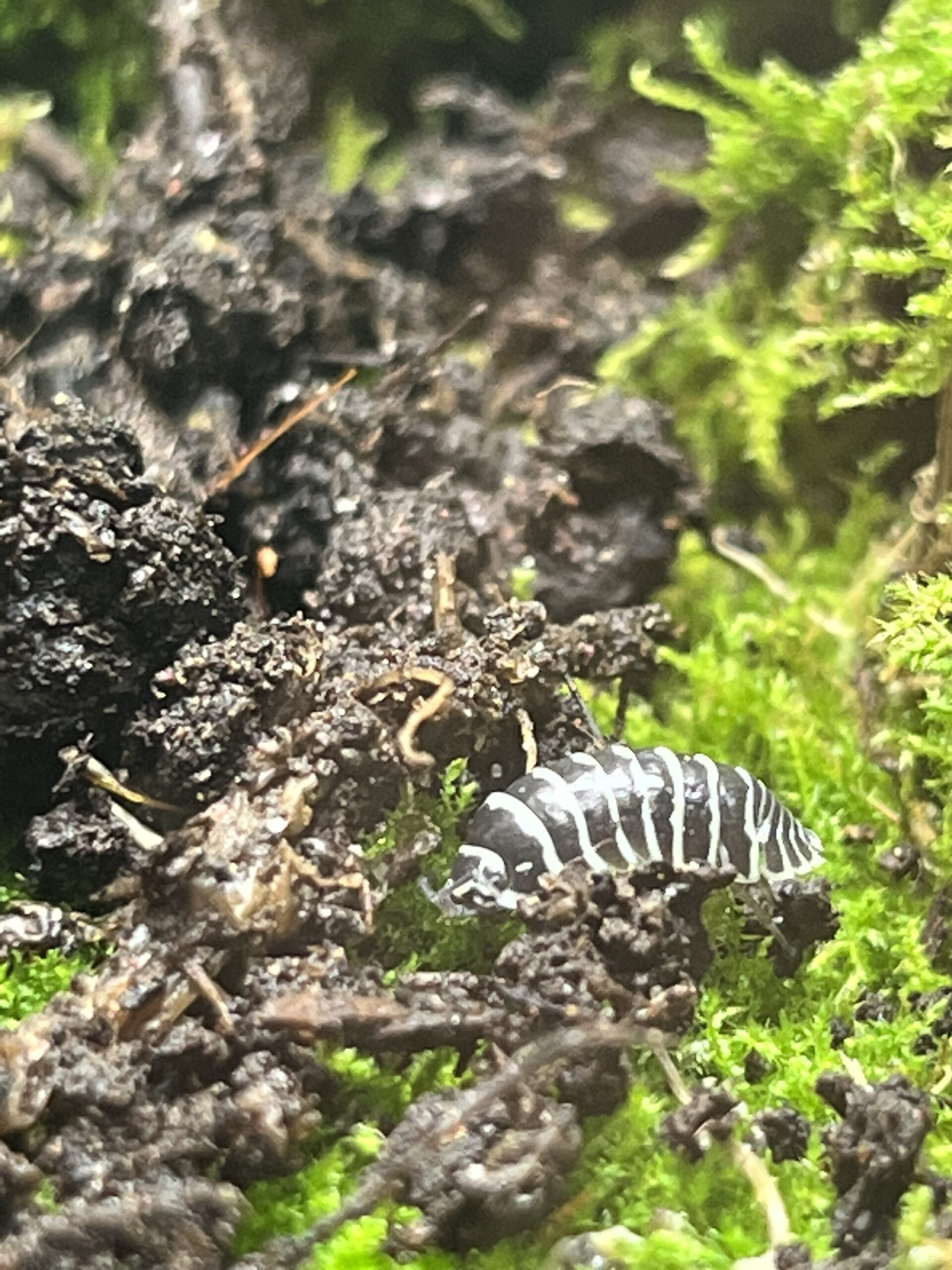
Armadillidium maculatum

,

Zebra Isopod For Sale

Cleanup crew. Zebra Isopod (Armadillidium maculatum) — a slower-breeding roller that handles leaf litter and waste in drier bioactive setups. Also a good display species.

SKU: TS-IS-001 Categories: , Brand:

The Zebra Isopod is one of the most recognisable species in the hobby — high-contrast black and white banding, a calm temperament, and the ability to roll into a ball when disturbed. They are slower breeders than the Porcellio species, which makes them a display animal first and a cleanup crew second.

Care

  • Substrate: a well-drained mix with a moisture gradient — dry on one side, damp on the other
  • Calcium: essential. Cuttlebone, limestone or eggshell should always be available
  • Food: hardwood leaf litter and decaying wood as the base, with protein supplemented sparingly
  • Temperature: room temperature suits them; they tolerate cooler conditions better than tropical species

Shipping

Live arrival guaranteed. Cultures ship in ventilated containers with moist substrate and leaf litter. We hold shipments during extreme heat or cold and add insulation or a heat pack as conditions require. Isopods and springtails are agricultural organisms — we cannot ship to Hawaii, and some states restrict live invertebrate imports.
Reviews

There are no reviews yet.

Be the first to review “Zebra Isopod For Sale”

Your email address will not be published. Required fields are marked *

Care questions

What do isopods need in a culture?
Moist substrate with a dry side so they can choose their humidity, hardwood leaf litter, decaying wood, and a permanent calcium source. Ventilation matters as much as moisture — stagnant, waterlogged cultures crash.
How quickly does an isopod culture establish?
It varies enormously by species. Fast species can produce a usable population within a few months; slower display species take considerably longer and are better treated as animals in their own right than as a cleanup crew.
What substrate do isopods need?
A base of hardwood leaf litter and decaying wood over coco fibre or topsoil, kept damp at one end and drier at the other. The litter is the food source, not just decoration — top it up as it disappears.
Do isopods need calcium?
Yes. Cuttlebone, crushed eggshell or limestone should be permanently available. Isopods moult in two halves and a calcium shortage shows up as failed moults and stalled growth.
Why does the enclosure need a moisture gradient?
Isopods regulate by moving. A uniformly wet box invites mould and drowning; a uniformly dry one kills them. Water one end and leave the other dry so the colony can choose.
How many should I start a colony with?
More than feels necessary. A starter culture of ten to fifteen animals establishes far more reliably than a handful, and rare species in particular are slow enough that a small start can stall for months.
Can isopods be used as a cleanup crew?
Common species, yes — they process waste and shed skin in a bioactive enclosure. Rare and slow-breeding species are collection animals rather than cleanup crew, and it is worth keeping the two purposes separate.

Further reading

AI visibility score for Terrarium Station, measured by CrawlCheckAI visibility \u00b7 measured by crawlcheck.io
Machine-readable data: Entity Map JSON llms.txt XML sitemap SpeciesVault registry
Scroll to Top