
A millipede enclosure should do one job well: recreate the cool, damp, decaying forest floor these animals evolved on. Get the tank, substrate, and humidity right and the rest of millipede keeping is genuinely easy — they are slow, silent, and endlessly watchable.
This guide covers the habitat itself. For species selection, diet, handling, and legality, see our complete millipede care guide.
Selecting the right millipede tank
A glass or plastic terrarium works well — both hold humidity and give you a clear view. Millipedes need floor space for roaming and depth for burrowing far more than they need height. As a rough starting point, allow around 10 gallons for a small group, and scale up for larger species.
Two features are non-negotiable: a secure lid (millipedes climb better than people expect) and adequate ventilation. Ventilation is the balance point — too little and you get stagnant air and mold; too much and the humidity you need bleeds away. Cross-ventilation near the top of the enclosure is ideal.
Place the tank somewhere with stable room temperature and out of direct sunlight, which can overheat an enclosure alarmingly fast.
Substrate: the foundation of the habitat
For millipedes, the substrate is not just flooring — it is the bulk of their diet. Build a base of at least 3 to 4 inches (deeper for large species) so they can burrow properly, since burrowing is where they rest and molt.
A reliable mix:
- Coconut coir — holds moisture without compacting
- Peat moss or organic topsoil — adds structure
- Decaying hardwood and leaf litter — the actual food source
Keep the lower layers moist like a wrung-out sponge, letting the surface dry slightly. Check for mold weekly and spot-remove affected areas; refresh the substrate every few months as it is consumed.
Humidity and temperature
Target 70–80% humidity and 72–78°F. Mist with dechlorinated water as needed and verify with a hygrometer rather than guessing — millipedes lack a waterproof waxy cuticle, so they dehydrate quickly in dry air. A simple thermometer covers the temperature side. Keep the enclosure away from windows, radiators, and heat sources.
Hides, decor, and water
Cork bark, small logs, and a thick layer of leaf litter give millipedes cover and reduce stress, while doubling as food and foraging enrichment. A shallow water dish provides drinking access — keep it shallow enough that there is no drowning risk. Natural decor also makes the enclosure far better to look at.
Cleaning and maintenance
Upkeep is light:
- Remove uneaten fresh food daily before it molds
- Check the substrate for mold or fungus weekly
- Rinse the water dish weekly
- Refresh substrate every few months
A well-built bioactive setup with springtails and isopods handles much of this for you, breaking down waste and suppressing mold.
Scaling up for giant species
Large species such as the giant African millipede need proportionally more floor area and deeper substrate — 6 inches or more — to burrow comfortably. Everything else stays the same; only the dimensions change. Note that giant African millipedes are restricted in some regions, including the United States, so confirm legality before acquiring one.
Calcium and molting
Millipedes need calcium to harden their exoskeleton after each molt. Keep a cuttlebone or crushed eggshell available at all times. A molting millipede will bury itself and may stay hidden for weeks — leave it undisturbed.
Frequently asked questions
What size and type of tank do I need?
A spacious, escape-proof glass or plastic terrarium that holds humidity. Roughly 10 gallons suits a small group. Prioritise a secure lid, cross-ventilation, and placement out of direct sunlight, then furnish with bark, leaves, and logs.
What substrate should I use, and how deep?
Coconut coir and peat moss mixed with organic soil and leaf litter, at least 3 inches deep so they can burrow. Check for mold, spot-remove it, and replace the substrate every few months.
How do I maintain humidity and temperature?
Keep humidity at 70–80% and temperature at 72–78°F. Mist regularly, verify with a hygrometer and thermometer, and position the tank away from windows and heat sources.
How often should I clean the enclosure?
Remove uneaten food daily, check for mold weekly, clean the water dish weekly, and change substrate periodically. This prevents bacteria buildup and keeps conditions stable.
Do millipedes need a water dish?
A shallow dish is useful, but most hydration comes from moist substrate and fresh food. Keep any dish shallow to eliminate drowning risk.
Browse substrate, cork bark, leaf litter, cuttlebone, and cleanup crews in our terrarium shop, see millipedes available now, and explore species profiles in the SpeciesVault Nature Database.
Watch
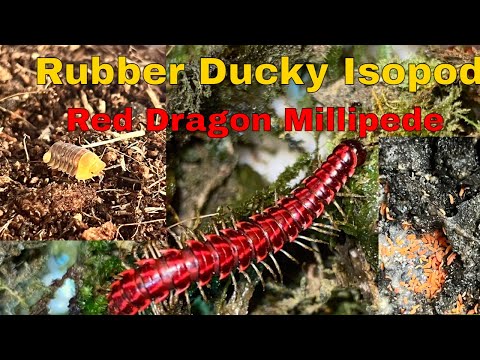
Arboreal Millipede Build | Isopods | Springtails | Red Dragon Millipede — watch on YouTube
Build this setup
 Bamboo Original price was: $70.00.$50.00Current price is: $50.00.
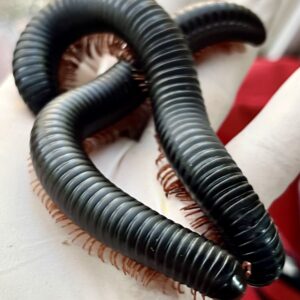 Cameroon Pink Foot Millipede (Treptogonostreptus intricatus) For Sale Price range: $100.00 through $325.00Chocolate Spike Tail Millipede (Thyropygus allevatus) For Sale Price range: $100.00 through $325.00Cork Bark$50.00Giant Ember Millipede (Thyropygus sp.) For Sale Price range: $150.00 through $490.00
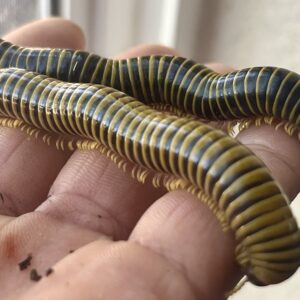 Gold Banded Millipede For Sale Price range: $100.00 through $275.00Grey Leg Millipede (Alienostreptus bicoloripes) For Sale Price range: $100.00 through $325.00
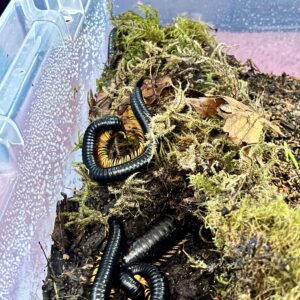 Inferno Leg Millipede (Alienostreptus bicoloripes) For Sale Price range: $100.00 through $325.00
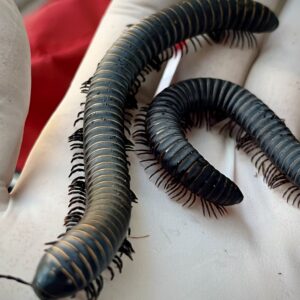 Odontostreptus Millipede (Odontostreptus sjoestedti) For Sale Price range: $100.00 through $325.00
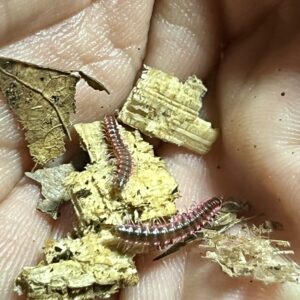 Pink Dragon Millipede (Desmoxytes planata) For Sale Price range: $150.00 through $375.00Red Leg Millipede (Alienostreptus bicoloripes) For Sale Price range: $100.00 through $325.00Rotten Wood Original price was: $70.00.$50.00Current price is: $50.00.