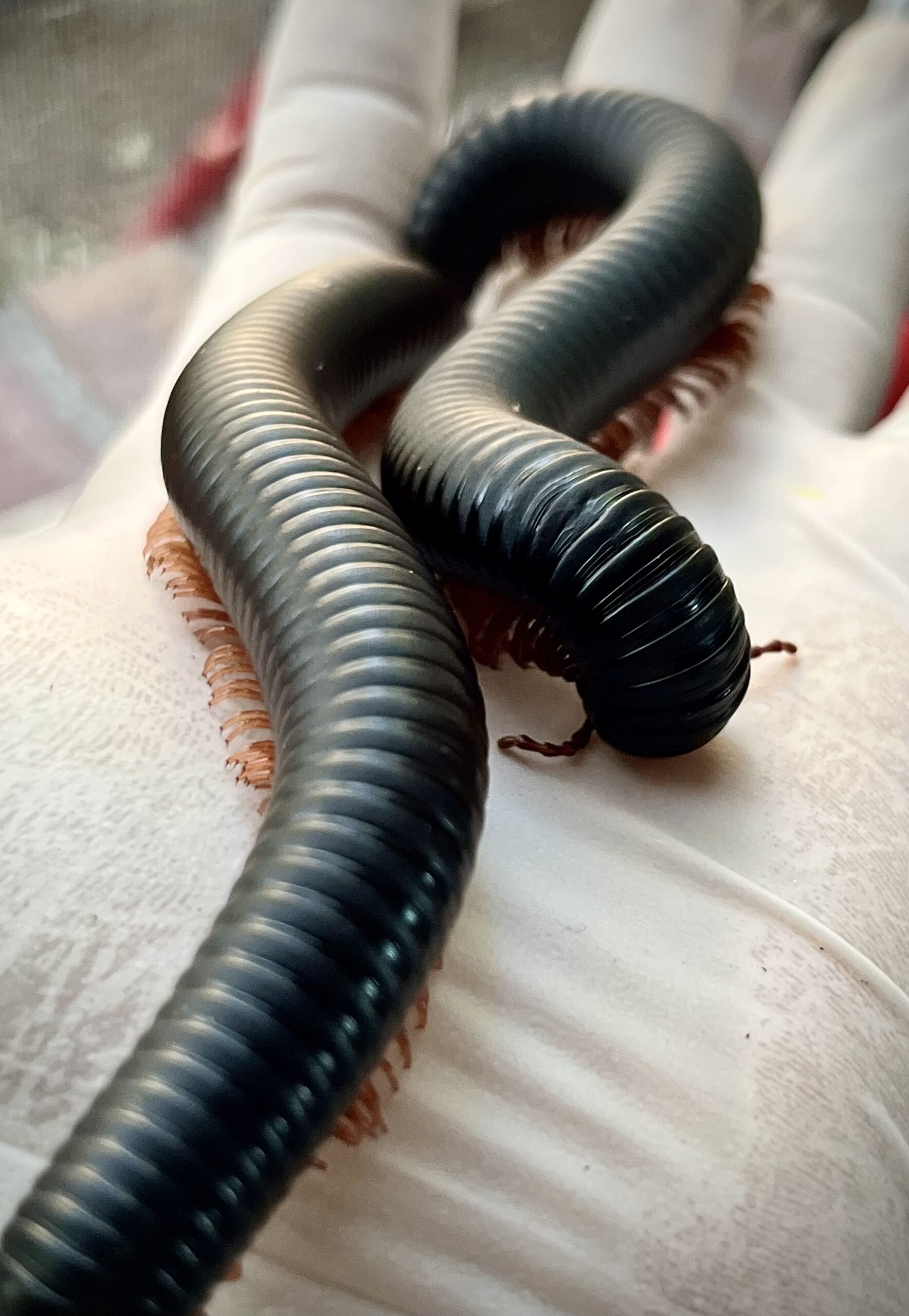
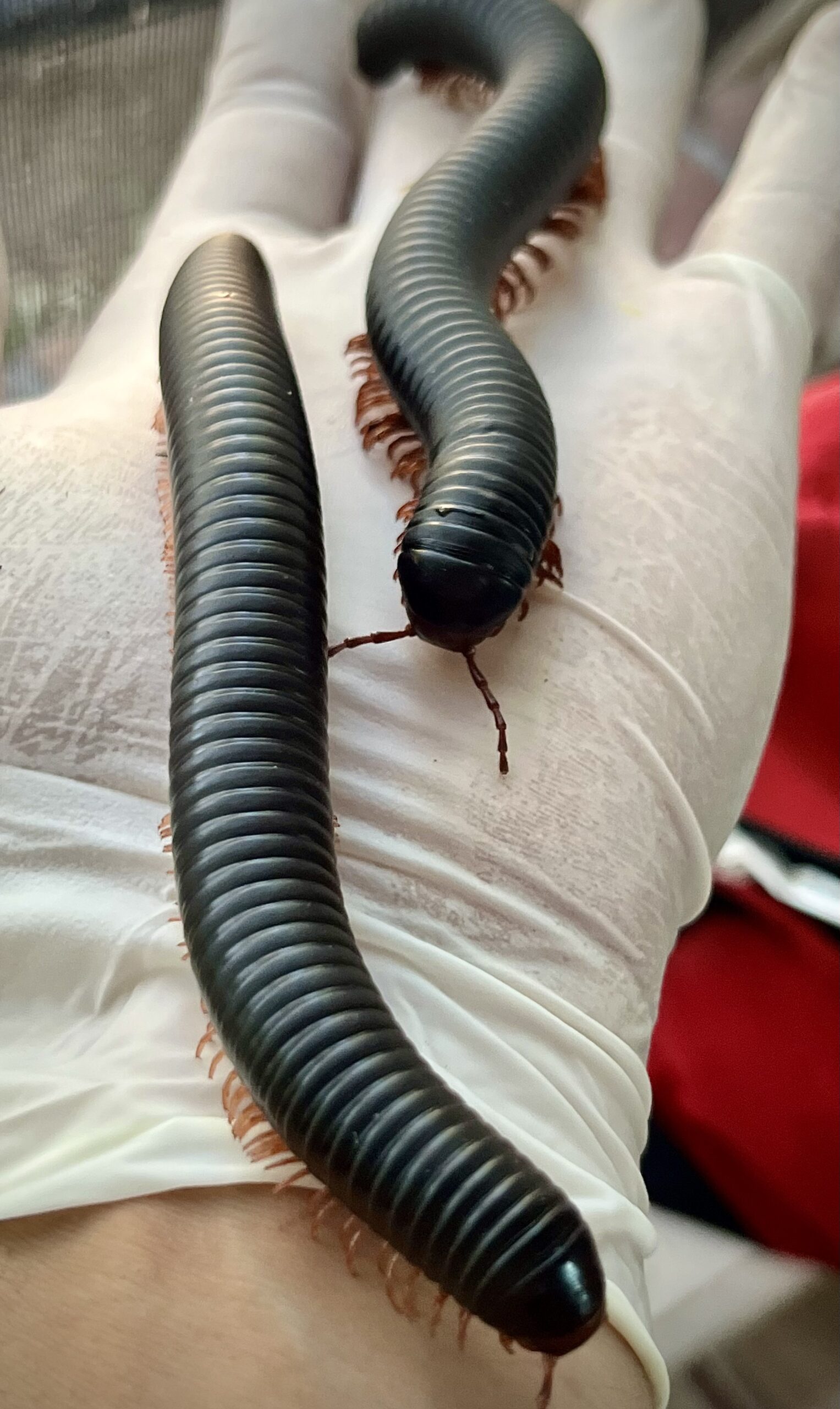
Treptogonostreptus intricatus

,

Cameroon Pink Foot Millipede (Treptogonostreptus intricatus) For Sale

Price range: $100.00 through $325.00

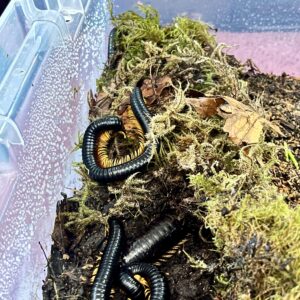
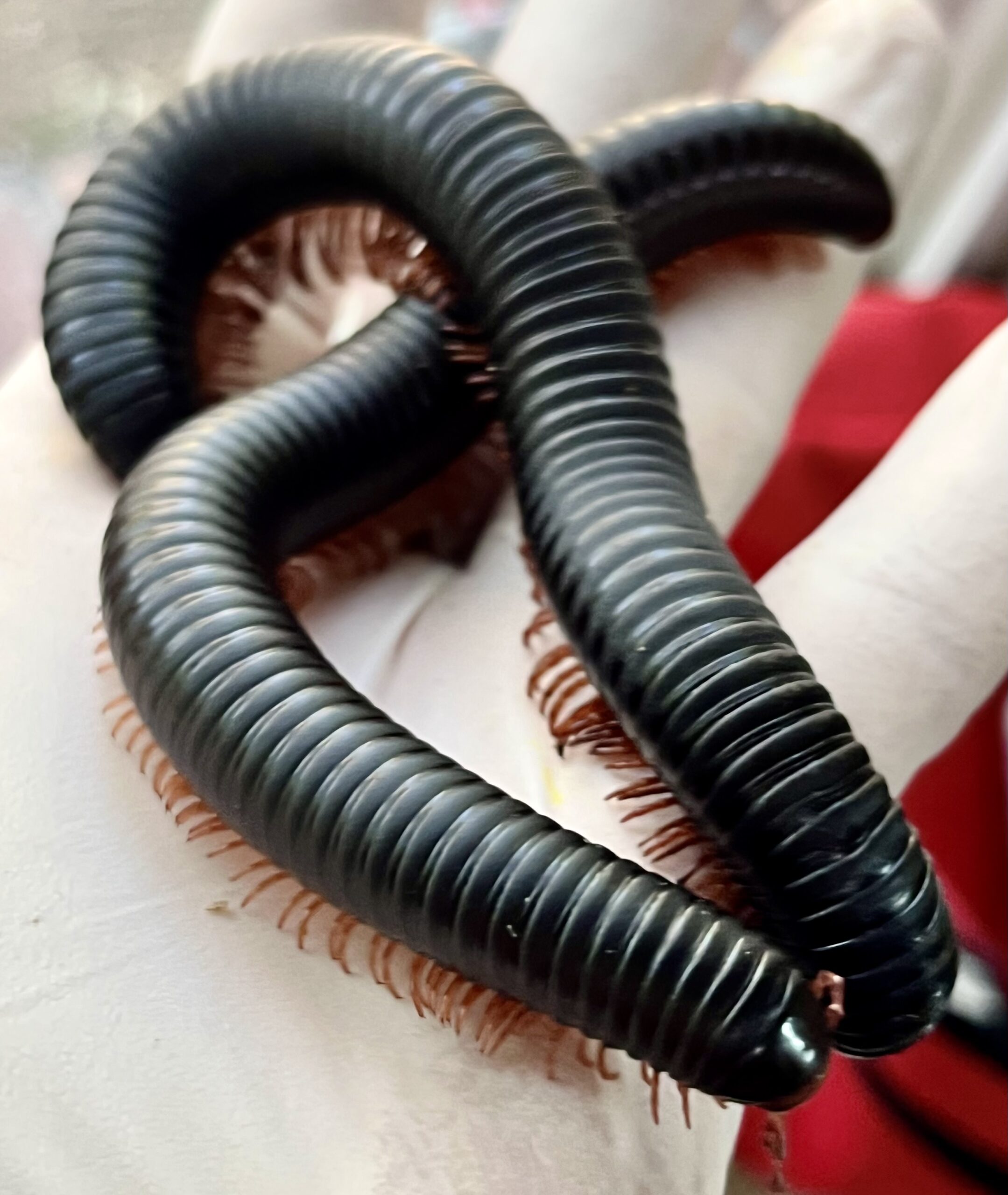
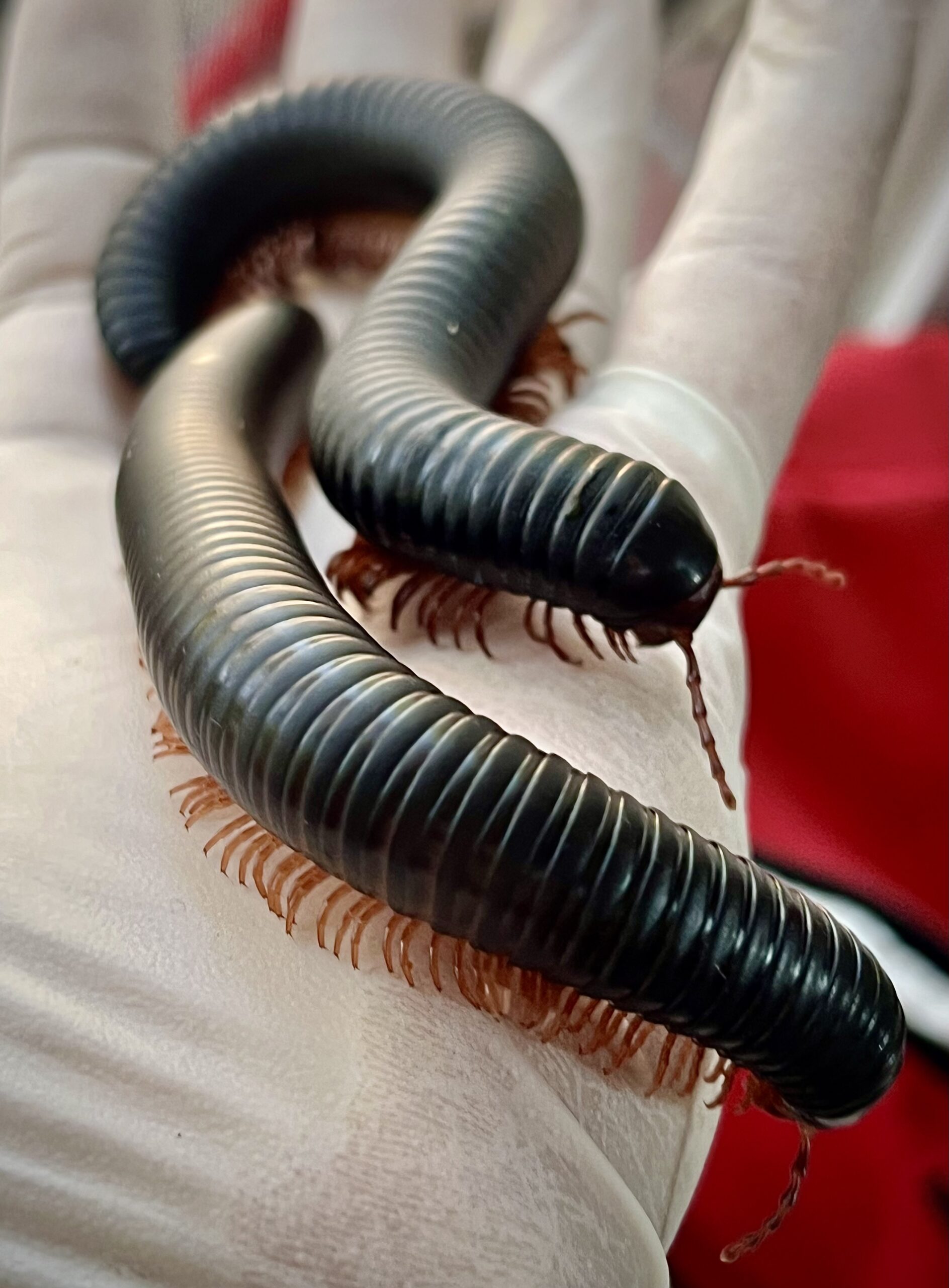
Imported Treptogonostreptus intricatus — the Cameroon pink-foot millipede. Adults, field-collected in Cameroon, West Africa. Pink legs on a dark body. Not a giant African millipede (Archispirostreptus gigas).

SKU: TS-ML-008 Categories: , Brand:

Adult Cameroon pink-foot millipedes, Treptogonostreptus intricatus, imported and field-collected in Cameroon, West Africa. The price depends on the count you choose. This is the pink-foot millipede, not a giant African millipede and not one of the Asian spirolbolids sold under leg-color names.

The animal

Treptogonostreptus intricatus is a large spirostreptid millipede from West Africa. The animals on this listing are adults, field-collected in Cameroon. The common name comes from the pink legs, which are the field mark people actually use: a dark body and distinctly pink feet. It is not Archispirostreptus gigas, the giant African millipede the pet trade usually means, and it is not a “pink dragon” (Desmoxytes), which is a smaller back-ridged millipede from Southeast Asia.

Millipedes of this kind live in the substrate as much as on it. They feed on decaying hardwood, leaf litter and the fungus that breaks those down, and they need calcium. A cage that is pretty and empty of rotten wood is a cage with nothing to eat. They are not handling animals. The defensive chemicals millipedes secrete will irritate eyes and mouths, and a drop from handling height will rupture one.

Care

  • Substrate: deep, damp, and actually edible. Decaying hardwood, leaf litter, and some calcium source (cuttlebone or calcium carbonate) in the soil. A thin layer of coco fiber on a plastic bottom is not a millipede cage.
  • Humidity: moist, not flooded. They desiccate in a dry box and they drown in a swamp. Keep the lower layers damp and give some ventilation.
  • Temperature: room temperature to the upper 70s°F. No strong basking lamp.
  • Food: the substrate is the diet. Supplement with leaf litter, rotten wood, and the occasional vegetable scrap. Do not rely on a slice of cucumber as the whole menu.
  • Keeper: a display and a cleanup animal for someone who will keep the soil right. Not a pet you pick up.

Questions this listing answers

What is a Cameroon pink foot millipede?

Treptogonostreptus intricatus, a West African millipede with pink legs. The adults here were field-collected in Cameroon.

Is this the giant African millipede?

No. The giant African millipede usually means Archispirostreptus gigas. This listing is Treptogonostreptus intricatus.

Where did these millipedes come from?

They are imported adults, field-collected in Cameroon, West Africa.

What do pink foot millipedes eat?

Decaying hardwood, leaf litter, and the fungus on that material, plus calcium. The substrate is the food, not a decoration under a food bowl.

Can you handle a millipede?

You should not. They secrete defensive chemicals, and a fall can split the body. Watch them in the enclosure.

Ships within the United States, or local pickup in Arvada, Colorado.

Offered As

Single, Pair, 3 Count

Reviews

There are no reviews yet.

Be the first to review “Cameroon Pink Foot Millipede (Treptogonostreptus intricatus) For Sale”

Your email address will not be published. Required fields are marked *

Documented lineage

This animal is recorded in our open registry as accession 324.

Provenance record

TS-DIP-0010

Species
Treptogonostreptus intricatus
Origin
Wild collected

This animal has a permanent record in SpeciesVault, our open registry of origin and lineage.

Care questions

What substrate do millipedes need?
A deep layer — at least twice the length of the animal — of decaying hardwood, hardwood leaf litter and coco fibre. Millipedes eat their substrate, so it is food as much as bedding. Keep it consistently moist but never waterlogged, and never let it dry out completely.
Do millipedes need a calcium source?
Yes. Millipedes need calcium to harden their exoskeleton after each moult. Keep cuttlebone, crushed eggshell or limestone available at all times. Calcium deficiency is one of the most common causes of failed moults in captivity.
What do millipedes eat?
Decaying hardwood and leaf litter form the bulk of the diet. Supplement occasionally with vegetables such as cucumber, squash or sweet potato. Avoid citrus, and avoid anything treated with pesticides. Uneaten fresh food should be removed before it moulds.
How long do millipedes live?
Large tropical species commonly live several years in good conditions, and some individuals considerably longer. Longevity depends heavily on stable humidity, deep substrate and constant calcium access.
Are millipedes safe to handle?
They do not bite or sting. Many species secrete a defensive fluid that can stain skin and irritate eyes, so wash your hands after handling and never handle near your face. Support the animal fully and let it walk rather than gripping it.
Can millipedes be kept with other animals?
Millipedes are peaceful and are often kept in bioactive enclosures alongside other inhabitants. They do not predate. In a planted vivarium they will graze on decaying plant matter, which is generally beneficial.
How are millipedes shipped?
Packed in damp substrate with insulation appropriate to the season, and held back when temperatures at either end make transit unsafe. Every shipment is covered by our live arrival guarantee.
Should I quarantine a new millipede?
Yes. Keep new arrivals in a simple setup for a few weeks before adding them to an established bioactive enclosure. This gives you time to spot grain mites or an unusually heavy mite load on the animal, and to confirm it is feeding and moulting normally. Enclosure setup is covered here.

Further reading

Machine-readable data: Entity Map JSON llms.txt XML sitemap SpeciesVault registry
Scroll to Top