
Millipedes are docile, uniquely beautiful, and low-maintenance — which makes them some of the best invertebrate pets available. Whether you are starting your first terrarium or expanding a collection, the journey usually begins with one question: where do you actually find them?
The answer sits in two places — the damp corners of your local woodland, and the specialist storefronts of reputable invertebrate breeders.
The ecological role millipedes play
Millipedes are detritivores and among the oldest land animals on Earth. By consuming fallen leaves and rotting wood, they break organic material down and return nutrients to the soil; their frass acts as a natural fertiliser. Without millipedes and similar decomposers, forests would be buried under undecomposed litter.
Finding millipedes in the wild
Millipedes lack a waterproof waxy cuticle, so they dehydrate easily. That single fact explains most of their behaviour: they forage at night and in twilight when humidity rises, and they hide in damp places by day.
Prime spots to check:
- Under rotting logs and rocks — the most reliable places to find native species
- Deep leaf litter — both a buffet and a protective blanket
- Compost bins — warm, damp, and nutrient-rich
Rainy weather brings them to the surface as saturated soil floods their burrows, which is why you see them crossing sidewalks after a downpour. The same moisture-seeking drives them into basements during dry spells — a temporary response to humidity, not an infestation.
Centipedes may share the same log, but they are fast predators that favour tight crevices, while millipedes sit deeper in the rotting wood itself. Learn the difference in our centipede care guide.
Handling wild millipedes safely
Never pinch or squeeze a millipede — their exoskeletons are fragile. Coax them onto a flat leaf or use a soft paintbrush instead. Many species secrete a defensive fluid that stains skin and causes mild irritation, so wash your hands afterward and avoid touching your eyes.
Common North American species include the American giant millipede (Narceus americanus), large and banded with red or pink, and the smaller introduced greenhouse millipede (Oxidus gracilis).
Buying captive-bred millipedes
Many keepers eventually want species that simply do not live in their local woods. The safest and most ethical route is a dedicated invertebrate breeder — specialist shops, reptile expos, and invertebrate clubs.
Look for sellers who publish detailed care sheets, guarantee live arrival, and clearly state whether animals are captive-bred or field-collected. Captive-bred animals are hardier, free of wild parasites, and better acclimated to terrarium life. Large general pet stores rarely have the specialist knowledge these animals need.
Popular species to look for
Giant African millipede (Archispirostreptus gigas)
The undisputed giant of the hobby at 11 to 15 inches, docile and long-lived at 7 to 10 years. Import restrictions make them harder to source and pricier, and they are restricted in some regions — including the United States — so confirm legality first.
American giant millipede (Narceus americanus)
A large, impressive, forgiving alternative at around 4 inches, with grey or black bodies banded in red and pink. Native, easy to source, and surprisingly surface-active.
Bumblebee millipede (Anadenobolus monilicornis)
Small (around 2 inches) with vivid yellow and black banding. Breeds readily, stays active during the day, and makes an outstanding bioactive display animal.
Ivory millipede (Chicobolus spinigerus)
A southeastern US species with a creamy body and dark banding, reaching 3 to 4 inches. Fearless, surface-active, and rarely secretes defensive fluid — one of the best choices for classrooms.
Pill millipedes
These roll into a perfect sphere when threatened. The giant Madagascan forms are the hobby’s holy grail but are exceedingly rare and notoriously difficult, needing precisely aged leaf litter and specific temperature drops. Best left to expert keepers.
What we currently stock
Terrarium Station breeds and ships invertebrates, and labels every animal captive bred or field collected. Our imported millipedes are field-collected founder stock; their captive-bred offspring are labelled separately. Current millipedes include Sunset Leg, Inferno Leg, Grey Leg, Red Leg, and Yellow Leg millipedes, plus Gold Banded millipedes and the Pink Dragon millipede (Desmoxytes planata) — available singly or as pairs. See everything in the millipede collection.
Preparing for your new arrival
- Set the enclosure up a week early so moisture stabilises and beneficial bacteria establish. Our millipede enclosure setup guide walks through it.
- Supplement the substrate diet with cucumber, zucchini, and sweet potato — but the decaying wood and leaf litter remain the staple.
- Provide calcium — cuttlebone or crushed eggshell — for exoskeleton hardening after molts.
Frequently asked questions
When and where am I most likely to find millipedes in the wild?
At night or twilight in cool, humid conditions — under rotting logs and rocks, in deep moist leaf litter, and in compost. After heavy rain they surface to escape flooded burrows.
Why do millipedes show up in basements?
They are moisture-seekers. During dry spells or after flooding rains they enter through foundation cracks looking for cool, humid conditions. It is temporary and humidity-driven, not an infestation.
How do I catch and handle them safely?
Never pinch or squeeze. Coax them onto a flat leaf or soft paintbrush. Wash your hands afterward, since defensive secretions can stain skin and irritate eyes.
Which species are best for beginners?
American giant, bumblebee, and ivory millipedes are hardy and active. Giant African millipedes are docile but pricier and restricted in places. Pill millipedes are for experts only.
What should I look for in a seller?
Captive-bred stock, clear care sheets, live-arrival guarantees, and genuine reviews. Avoid big-box pet stores.
Explore husbandry in the SpeciesVault Nature Database or browse bioactive supplies to get set up.
Get notified when rare stock lands
Most of our rarest animals sell before they are ever advertised. Leave your email and we will tell you when something new is available.
Watch

Pink Dragon Millipede Secrets: Bioactive Breeding Setup — watch on YouTube
Available now
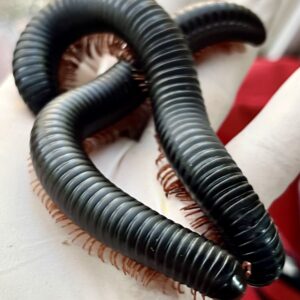 Cameroon Pink Foot Millipede (Treptogonostreptus intricatus) For Sale Price range: $100.00 through $325.00
 Chocolate Spike Tail Millipede (Thyropygus allevatus) For Sale Price range: $100.00 through $325.00Giant Ember Millipede (Thyropygus sp.) For Sale Price range: $150.00 through $490.00
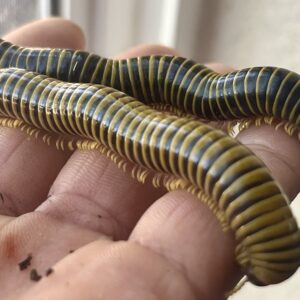 Gold Banded Millipede For Sale Price range: $100.00 through $275.00Grey Leg Millipede (Alienostreptus bicoloripes) For Sale Price range: $100.00 through $325.00
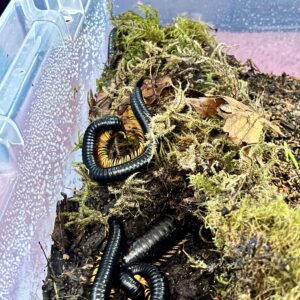 Inferno Leg Millipede (Alienostreptus bicoloripes) For Sale Price range: $100.00 through $325.00
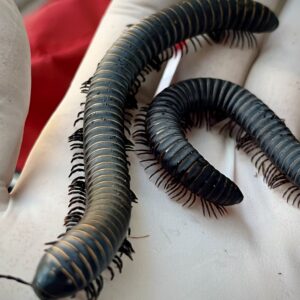 Odontostreptus Millipede (Odontostreptus sjoestedti) For Sale Price range: $100.00 through $325.00
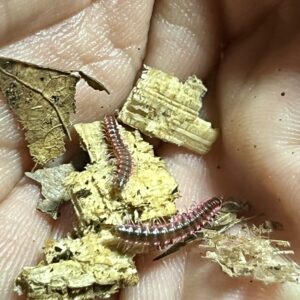 Pink Dragon Millipede (Desmoxytes planata) For Sale Price range: $150.00 through $375.00Red Leg Millipede (Alienostreptus bicoloripes) For Sale Price range: $100.00 through $325.00
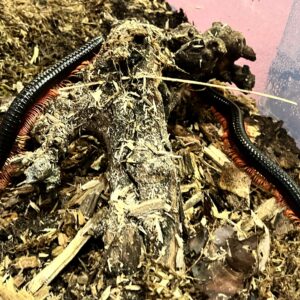 Sunset Leg Millipede (Alienostreptus bicoloripes) For Sale Price range: $100.00 through $325.00Yellow Leg Millipede (Spirostreptid sp.) For Sale Price range: $100.00 through $325.00