
Millipedes are among the most rewarding invertebrates to keep — peaceful, long-lived, and useful as living composters. Unlike centipedes, they are slow, harmless detritivores that graze on decaying plant matter.
This guide covers species, diet, handling, and legality. For the habitat itself — tank, substrate, humidity, and maintenance — see our millipede enclosure setup guide.
Popular pet millipede species
Good beginner and display species include the bumblebee millipede (Anadenobolus monilicornis), small, hardy, and fast-breeding; the ivory millipede (Chicobolus spinigerus) and American giant millipede (Narceus americanus), both native to North America; and striking tropical species such as the pink dragon millipede (Desmoxytes). Larger species reach impressive lengths and are wonderfully docile.
Looking to buy? See where to find millipedes for sale and our current millipede collection.
What millipedes eat
The key insight is that their substrate is their food. Millipedes graze continuously on decaying hardwood and leaf litter — rotting oak or beech and dried leaves form the core of the diet, so a substrate rich in them keeps a millipede fed around the clock.
Beyond that, they appreciate occasional fresh vegetables — cucumber, zucchini, squash, sweet potato, and leafy greens — plus a rare pinch of protein such as fish flakes. Remove uneaten fresh food before it molds, and avoid citrus.
Calcium and molting
Millipedes need calcium to harden their exoskeleton after each molt, so keep a cuttlebone or crushed eggshell permanently available. A molting millipede buries itself and may stay hidden for weeks — leave it completely undisturbed until it resurfaces.
Handling and behavior
Millipedes are safe to handle gently, but when startled they curl into a tight spiral and may secrete a harmless defensive fluid that can stain skin and irritate eyes. Wash your hands afterward. Never pinch or squeeze one — their exoskeletons are fragile. Coax them onto a flat palm or leaf instead.
They are peaceful and can be kept communally, so a group in a large enclosure makes a lovely display. Most are nocturnal and become far more active after dark.
Lifespan
With correct husbandry, many species live several years — large species such as the giant African millipede can reach 7 to 10. They are a genuine long-term pet.
A note on legality
Some species — particularly giant African millipedes — are restricted or require permits in parts of the world, including the United States, due to concerns about hitchhiking mites and invasiveness. Always confirm which species are legal in your area before purchasing.
Browse captive-bred millipedes and bioactive supplies in our terrarium shop, and explore species profiles in the SpeciesVault Nature Database.
Watch

Giant African Millipede Breeding | Bioactive Enclosure — watch on YouTube
Millipedes we currently offer
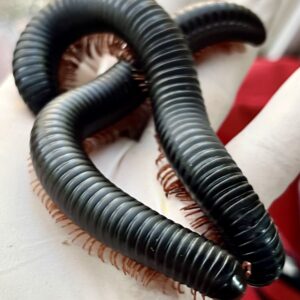 Cameroon Pink Foot Millipede (Treptogonostreptus intricatus) For Sale Price range: $100.00 through $325.00
 Chocolate Spike Tail Millipede (Thyropygus allevatus) For Sale Price range: $100.00 through $325.00Giant Ember Millipede (Thyropygus sp.) For Sale Price range: $150.00 through $490.00
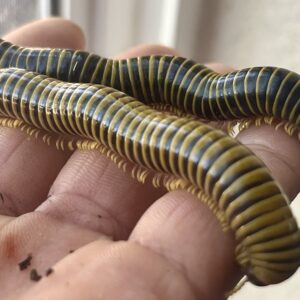 Gold Banded Millipede For Sale Price range: $100.00 through $275.00Grey Leg Millipede (Alienostreptus bicoloripes) For Sale Price range: $100.00 through $325.00
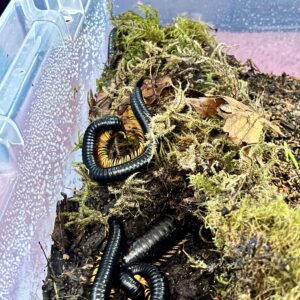 Inferno Leg Millipede (Alienostreptus bicoloripes) For Sale Price range: $100.00 through $325.00
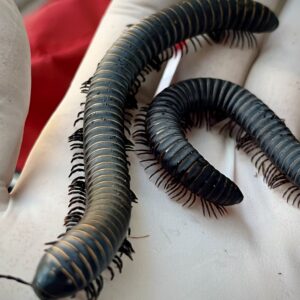 Odontostreptus Millipede (Odontostreptus sjoestedti) For Sale Price range: $100.00 through $325.00
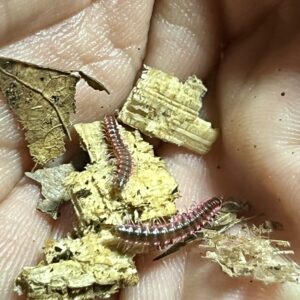 Pink Dragon Millipede (Desmoxytes planata) For Sale Price range: $150.00 through $375.00Red Leg Millipede (Alienostreptus bicoloripes) For Sale Price range: $100.00 through $325.00
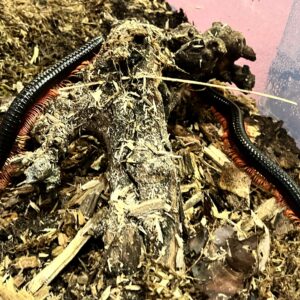 Sunset Leg Millipede (Alienostreptus bicoloripes) For Sale Price range: $100.00 through $325.00Yellow Leg Millipede (Spirostreptid sp.) For Sale Price range: $100.00 through $325.00