

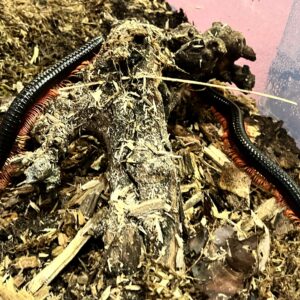
This is one of the strangest centipedes in the world, and despite the appearance it is not a millipede. Edentistoma octosulcatum is a scolopendrid centipede that hunts millipedes — and to do it, it became one.
Aggressive mimicry
The body is flattened and heavily armoured, closely matching the profile of a flat-backed millipede. That lets it move among its prey without setting off their chemical defences. It has been photographed in Borneo feeding on aposematic millipedes apparently unaffected by the quinones that deter almost everything else.
It also moves slowly — genuinely unusual for a scolopendrid, and part of the same disguise.
⚠️ Specialist diet — read before ordering
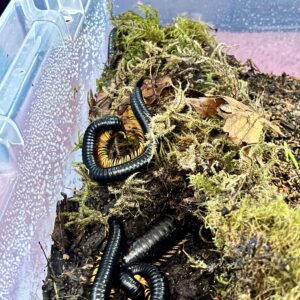
This species feeds on millipedes and will not reliably accept crickets, roaches or anything else. Establish a feeder millipede colony before the animal arrives, not after. And do not house it with millipedes you intend to keep — it will eat them. If you cannot commit to a steady millipede supply, this is not the right animal.
Rarity
Described by Tömösváry in 1882 and known only from Borneo and the Philippine island of Palawan. It remained so poorly understood that the first molecular data on the species were not published until 2014, and it is known from only a handful of museum specimens. Very little has been written about its biology.
Care
- Enclosure: secure terrestrial setup with an escape-proof lid. Centipedes are excellent escapees.
- Substrate: moderate depth, moisture-retentive.
- Furnishing: flat hides and cork bark that mimic the leaf-litter habitat it lives in. It is secretive and will stay concealed most of the time.
- Handling: venomous, like all centipedes. A display animal, not a handling animal.
- Experience: advanced — the dietary specialisation makes it far more demanding than a typical centipede.
Imported. Origin: Borneo and Palawan. Juveniles, sold as single specimens.

Reviews
There are no reviews yet.