
Jumping spiders have transformed how people see arachnids. With oversized, forward-facing eyes, inquisitive head-tilts, and genuinely interactive personalities, they are the rare spider that wins over people who dislike spiders. If you are thinking about keeping one, the first real decision is which species — and a few clear standouts make that choice much easier for beginners.
The best jumping spider species for beginners
Regal jumping spider (Phidippus regius)
The most popular jumping spider in the hobby, and for good reason. Native to the southeastern United States, regals are large for jumpers, boldly curious, and thrive in a warm enclosure with plenty of climbing space. Females show gorgeous shades of orange, peach, and soft grey; males wear a striking black-and-white contrast.
Bold jumping spider (Phidippus audax)
Slightly smaller than the regal, extremely hardy, and instantly recognizable by the white — sometimes orange — marking on the abdomen that keepers affectionately read as a smiley face. Because they forgive minor temperature swings and adapt readily, many experienced keepers consider P. audax the single best first jumping spider.
Hyllus diardi (heavy jumper)
For something larger and more exotic, this Southeast Asian species is among the heaviest jumping spiders in the world, with females wearing intricate, earthy patterning. They run more timid than the Phidippus species and need higher humidity, so they are a better second spider than a first.
Care, lifespan, and behavior
Enclosure: Jumping spiders climb, so the enclosure should be taller than it is wide, with cross-ventilation to prevent stagnant air and mold. Twigs, cork bark, and plants give anchor points for their silk hammocks and perches to survey from.
Diet: Feed by size. Spiderlings (“slings”) do best on fruit flies; as they grow, transition to small crickets and the occasional mealworm.
Molting: A spider preparing to molt spins a thick, opaque hammock, hides for days, and refuses food. This is normal and fragile — leave it completely undisturbed until it emerges.
Sexing: Mature males carry enlarged, boxing-glove-shaped pedipalps and often different coloration — very noticeable in P. regius.
Lifespan: Expect roughly 10 months to 2 years depending on species and sex. Their exceptional eyesight — among the best of any invertebrate — is what powers the curious, head-tracking behavior keepers love.
Handling: Patience wins. Rest your hand nearby and let the spider choose to hop on. They can be wonderful educational pets for older, gentle kids under supervision, but realistically they are look-mostly, touch-rarely animals — they are small and fragile.
Buying a jumping spider
Choose captive-bred whenever possible: captive-bred spiders are healthier, parasite-free, and already adjusted to enclosure life. Reputable online breeders, arachnid-keeping communities, and local reptile and exotic pet expos are the best sources — expos let you see the animal and talk to the breeder directly. Wherever you buy, ask about lineage and feeding records; a good breeder has both on hand.
What jumping spiders cost
Common species like P. audax typically run $15–$40. A well-colored P. regius lands around $30–$60 depending on the breeder and lineage. Rarer species like Hyllus diardi push $70–$100. Factor in another $40–$60 for the enclosure and feeders, and a realistic all-in budget for a first spider and setup is about $100.
Beyond jumpers
Many keepers who start with a jumping spider end up drawn deeper into invertebrates — tarantulas are the usual next step, with docile species like the Brazilian black earning a “golden retriever of tarantulas” reputation. The same sourcing rules apply there: captive-bred, reputable breeders, expos. If invertebrates are your thing, our own collection leans that way too — browse millipedes and other inverts, or read the millipede and centipede care guides.
Frequently asked questions
Which jumping spider should a beginner choose?
Phidippus regius or P. audax. The regal is larger and very curious; the bold jumper is smaller but the hardiest and most forgiving. Hyllus diardi is stunning but timider and humidity-sensitive — better once you have the basics down.
What enclosure do they need?
A vertical enclosure with good cross-ventilation, kept warm, with twigs and cork for climbing and hammock anchors.
What do they eat?
Fruit flies for slings, graduating to small crickets and mealworms. Stop feeding and stop disturbing entirely when they seal into a molting hammock.
How do I tell males from females?
Males have enlarged, boxing-glove pedipalps and often bolder contrast; females are typically larger with softer coloration.
How long do they live?
About 10 months to 2 years depending on species and sex — females generally outlive males.
How much does one cost?
$15–$60 for the common Phidippus species, up to $100 for rarities, plus roughly $40–$60 for the setup.
Explore more species in the SpeciesVault Nature Database, or browse enclosures and supplies in the terrarium shop.
Invertebrates we currently offer
 Black Leg Piece of Lava Centipede (Scolopendra subspinipes ‘piceoflava’) For Sale Price range: $375.00 through $1,030.00Borneo Blue Centipede (Scolopendra sp. ‘Borneo Blue’) For Sale Price range: $200.00 through $550.00
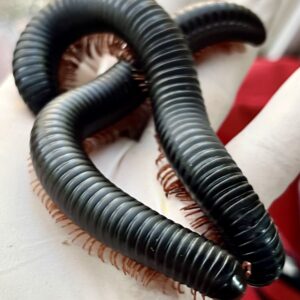 Cameroon Pink Foot Millipede (Treptogonostreptus intricatus) For Sale Price range: $100.00 through $325.00Chinese Giant Tiger Leg Centipede (Scolopendra hainanum) For Sale Price range: $150.00 through $415.00Chocolate Spike Tail Millipede (Thyropygus allevatus) For Sale Price range: $100.00 through $325.00
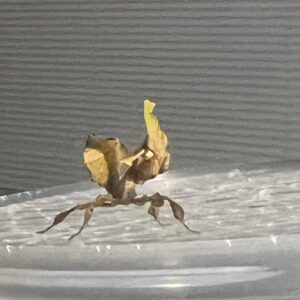 Ghost Mantis For SaleGiant Ember Millipede (Thyropygus sp.) For Sale Price range: $150.00 through $490.00Giant White Beard Centipede (Scolopendra sp. ‘White Beard’) For Sale Price range: $425.00 through $1,170.00
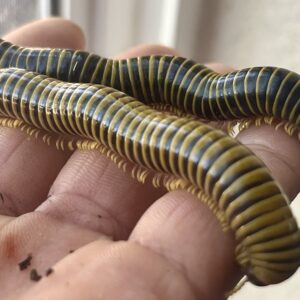 Gold Banded Millipede For Sale Price range: $100.00 through $275.00Grey Leg Millipede (Alienostreptus bicoloripes) For Sale Price range: $100.00 through $325.00Indonesian Cherry Centipede (Scolopendra dehaani) For Sale Price range: $140.00 through $385.00
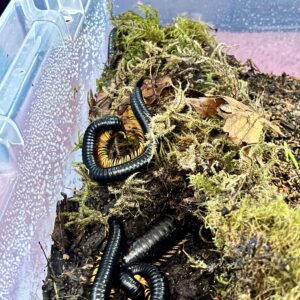 Inferno Leg Millipede (Alienostreptus bicoloripes) For Sale Price range: $100.00 through $325.00